

Blog
Journal
12 Iconic Rolex Models and Their Purpose
 5 min read
Twelve references, one crown, and a logic running through all of them. Rolex never set out to build a single catalogue of luxury objects; it built tools for specific jobs and let the market decide which ones turned into status symbols. That is why the Submariner and the Milgauss share a case language yet almost nothing else. Below is each model, the year it arrived, and the work it was designed for.
The divers: Submariner and Sea-Dweller
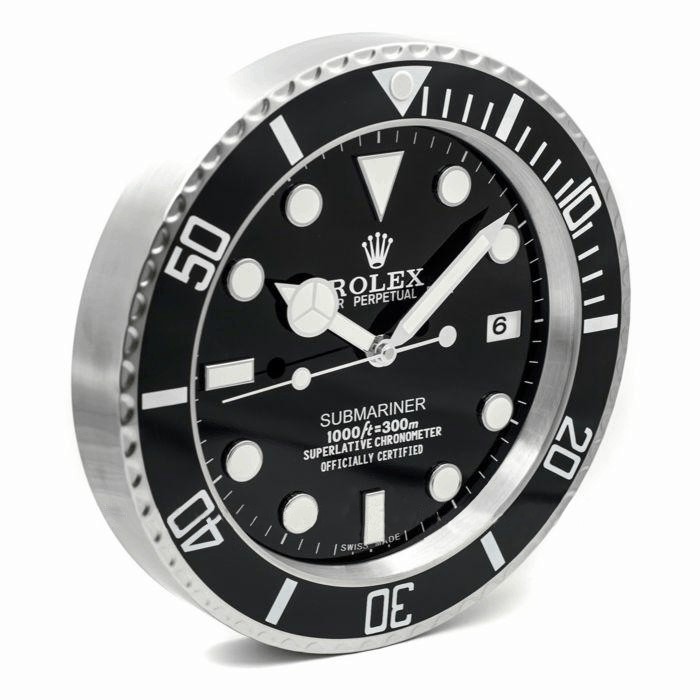
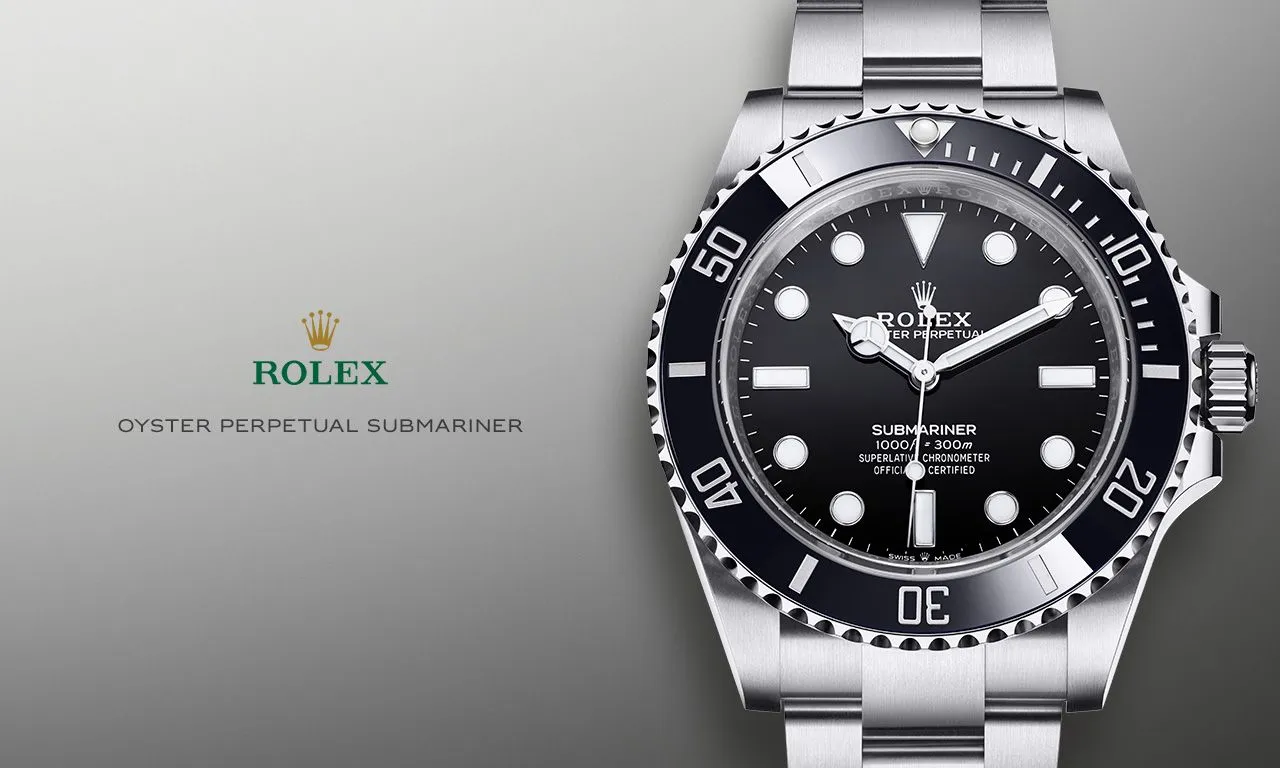
The Submariner landed in 1953, when recreational diving was taking off and a wristwatch was the only instrument a diver could read underwater. The rotating bezel timed bottom time, the case kept water out, and the dial stayed legible in murk. It has spent seventy years since proving it also works with a suit.
The Sea-Dweller answered a narrower problem in 1967. Saturation divers live for days inside pressurised chambers, where helium works its way into the case; on the way back up it must be allowed out again, or the crystal leaves the building. The helium escape valve exists for that single moment, which makes the Sea-Dweller the most specialised watch in the mainstream line-up.
The everyday three: Oyster Perpetual, Datejust, Day-Date
In 1931 the Oyster Perpetual paired the sealed Oyster case with a rotor that wound the movement from wrist motion. No date, no chronograph, no bezel markings — just accurate time, protected from water and dust. It remains the purest expression of the idea.
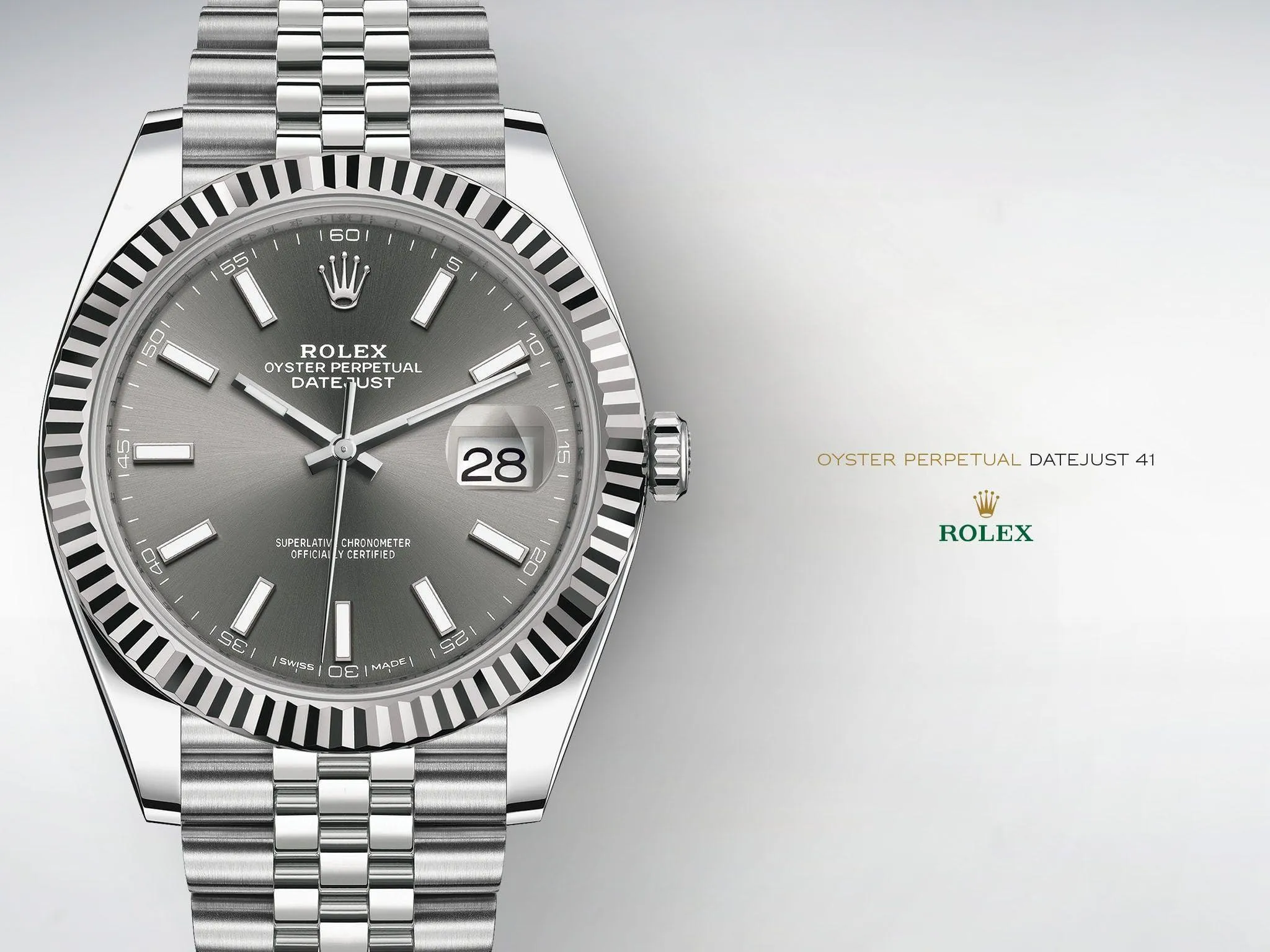
The Datejust followed in 1945 and added the complication everyone now takes for granted: a date that changed itself at midnight, a first for a wristwatch. That single function is why it became the default office watch for several generations.
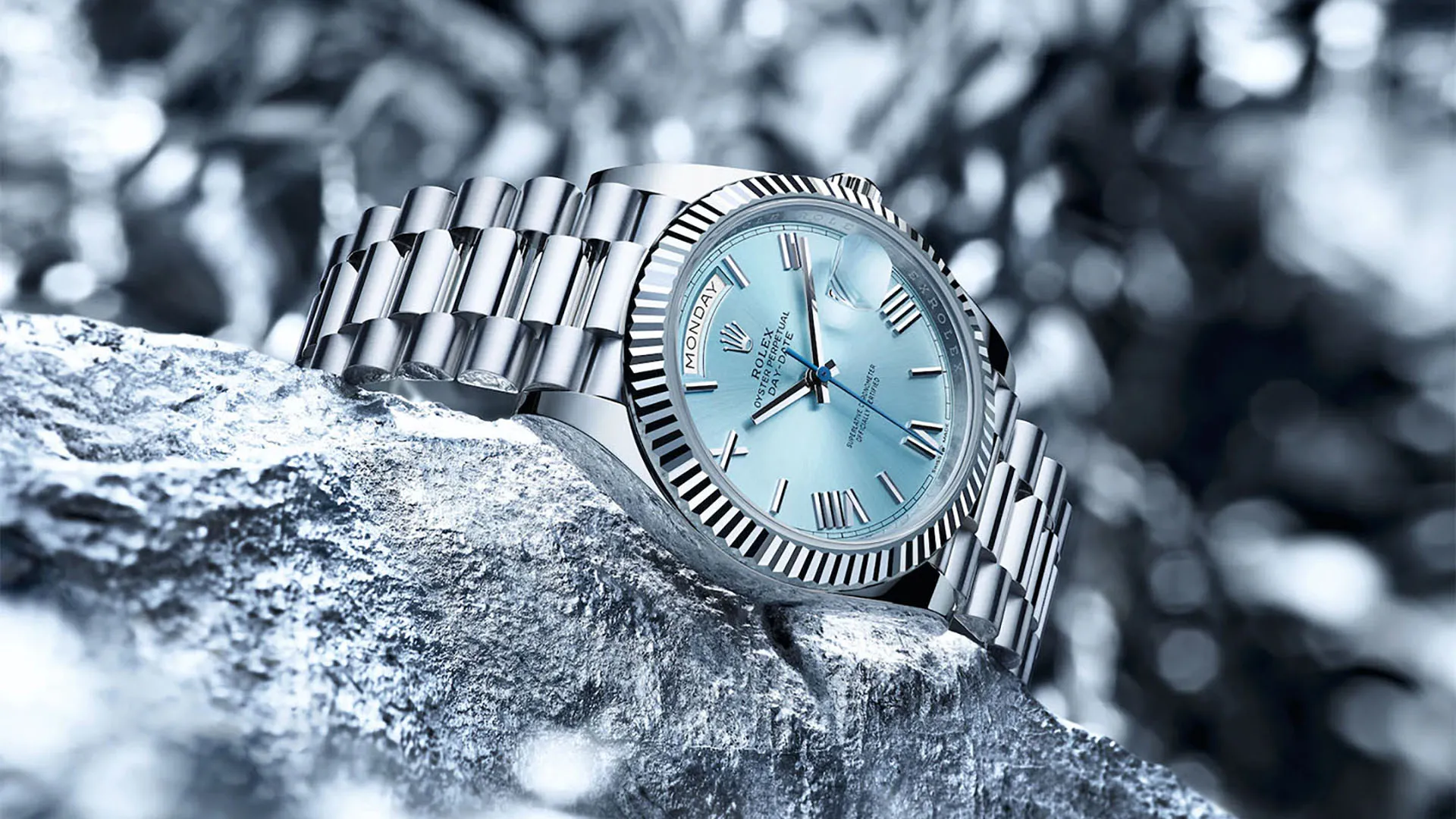
1956 brought the Day-Date, which spelled the weekday out in full above the date and has been the executive’s watch ever since. Where the Datejust is versatile, the Day-Date is declarative — the one you wear when the room needs to know what you do.
Speed and travel: Daytona, GMT-Master, Sky-Dweller
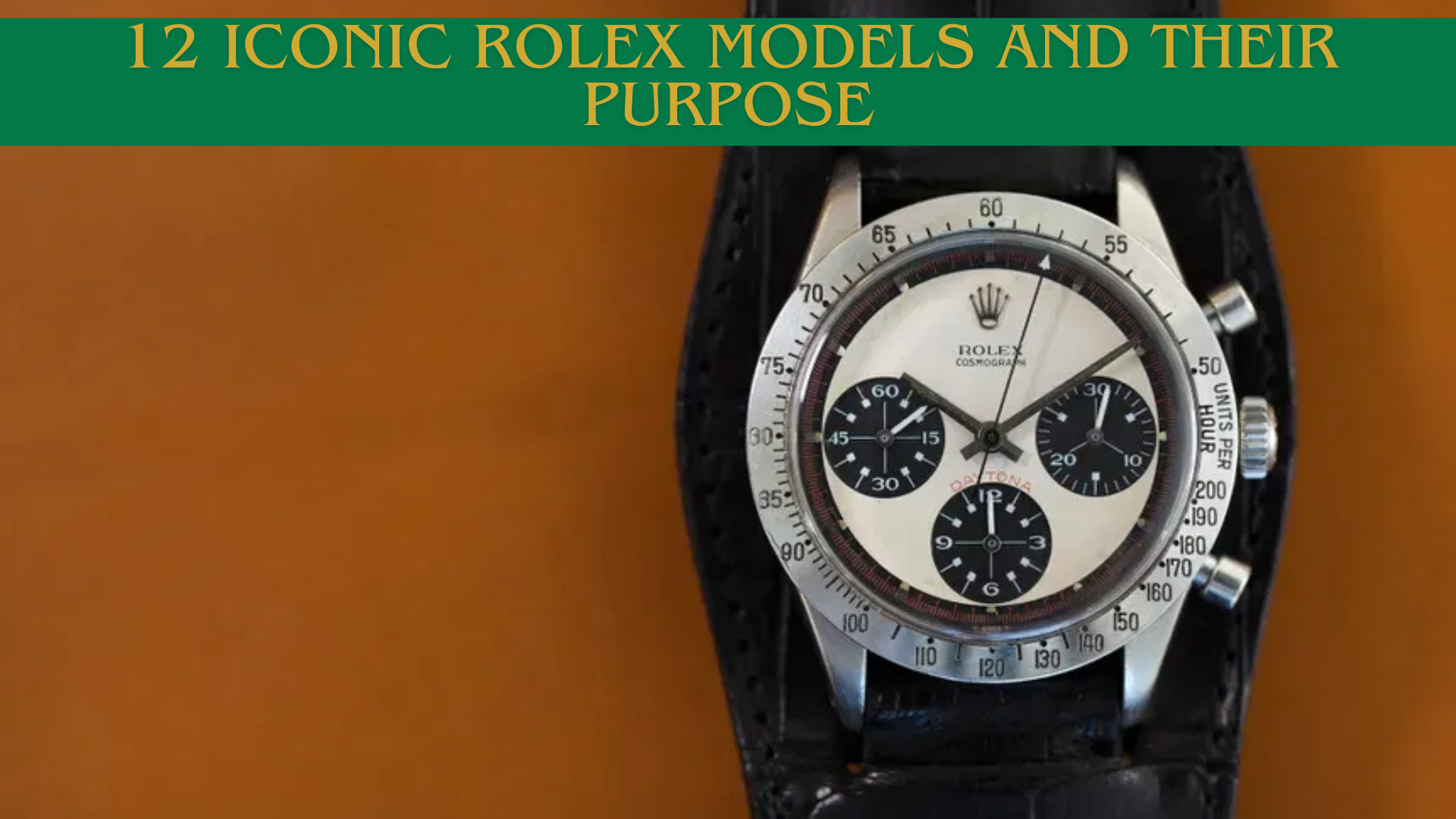
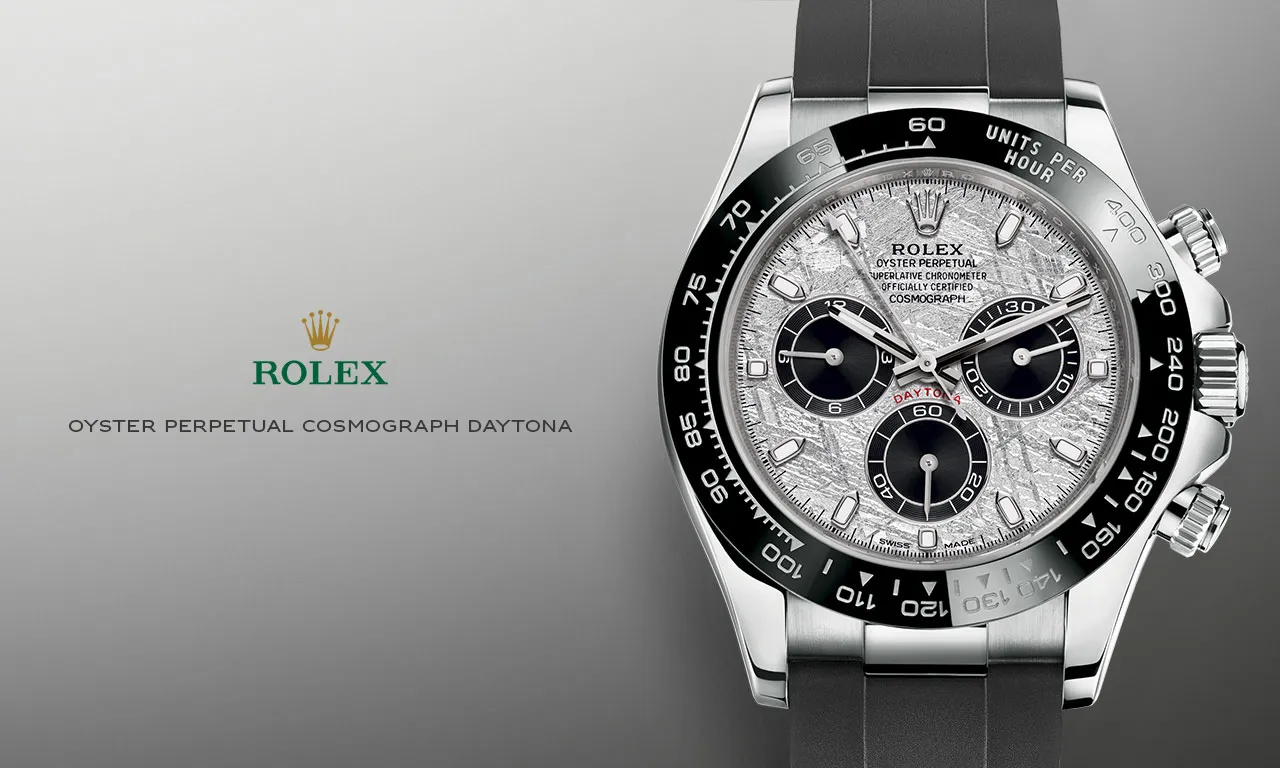
The Cosmograph Daytona arrived in 1963, named for the Florida speedway, and was built so a driver could read elapsed time and average speed without taking a hand off the wheel. Its tachymeter scale is the giveaway: this is a stopwatch that happens to tell the time.
The GMT-Master came earlier, in 1955, developed with Pan American Airways for crews crossing several zones in a single duty period. A 24-hour bezel and an arrow-tipped hand let a pilot read home time and local time at once. Modern versions use two-tone Cerachrom inserts for the same job.
The Sky-Dweller, added in 2012, is the travel watch for people who no longer fly the plane: a second time zone plus an annual calendar, built to keep a traveller oriented without consulting a manual.
Field, air and laboratory: Explorer, Air-King, Milgauss
The Explorer shares 1953 with the Submariner but points at mountains instead of reefs. Its brief came from the Everest ascent that year, where Hillary and Norgay wore Rolex prototypes, and its design favours legibility over everything: big markers, clear hands, nothing to misread at altitude.
The Air-King, launched in 1945 as part of the Air series honouring Royal Air Force pilots, is the cockpit equivalent — a clean, readable dial for people working around instrument panels and their magnetic fields.
The Milgauss, introduced in 1956, was built for laboratories, power stations and hospitals where ordinary movements stop making sense. A soft iron inner cage shields the calibre from fields up to 1,000 gauss, and the orange lightning-bolt seconds hand is the only whimsy in an otherwise serious instrument.
The regatta watch: Yacht-Master
Introduced in 1992, the Yacht-Master reworked the nautical tool watch for people who race sailboats on weekends and sit in meetings during the week. Its bidirectional bezel with raised numerals is easier to grip than a dive bezel, and current references use RLX titanium among their materials.
The twelve at a glance
- Submariner, 1953 — professional diving, built to survive pressure and salt.
- Explorer, 1953 — high-altitude climbing, legibility above all.
- GMT-Master, 1955 — two time zones for long-haul pilots.
- Day-Date, 1956 — boardroom prestige, weekday spelled out.
- Milgauss, 1956 — magnetic fields up to 1,000 gauss.
- Daytona, 1963 — motorsport timing and average speed.
- Sea-Dweller, 1967 — saturation diving and helium release.
- Oyster Perpetual, 1931 — sealed case, self-winding, nothing extra.
- Datejust, 1945 — the automatic midnight date change.
- Air-King, 1945 — aviation heritage, cockpit legibility.
- Yacht-Master, 1992 — sailing and regatta timing.
- Sky-Dweller, 2012 — second zone plus annual calendar.
Why enthusiasts buy the replica versions
Most people who try a super clone are not trying to fool anyone; they are running a long test drive. Is the Submariner too heavy for a desk job? Does the Daytona sit too thick under a cuff? A month on the wrist answers questions that an afternoon in a boutique cannot.
Today’s best builds reproduce roughly 90 to 95 percent of the genuine experience, using 904L steel, sapphire crystals and clone movements that keep the same beat. That is enough to decide whether a reference suits you before committing five figures to the real thing — and enough to enjoy the design if it turns out you never will.
Frequently asked questions
Which Rolex is the most iconic?
The Submariner, by most measures. It has been in continuous production since 1953, it defined the dive watch category, and it is the model most people picture when they hear the brand name.
Why do Rolex watches hold their value?
Limited supply, heavy demand and consistent build quality across decades. Steel sports references in particular trade above retail on the secondary market, which is why so many buyers treat them as assets rather than accessories.
Which model makes the best first Rolex?
The Datejust for a dressier life, the Daytona if you have the budget and the patience, and the Oyster Perpetual if you want the purest version of the idea. None of them is a mistake.

Jake Ehrlich
Jake Ehrlich is a renowned Rolex historian, collector, and the Editor & Publisher of Jake's Rolex World, one of the most widely read Rolex publications globally. With a passion that spans decades, Jake has owned and worn over 650 Rolex watches, ranging…
All articles by Jake Ehrlich →