

Blog
Rolex, Chinese Parts and the Swiss Made 60% Rule

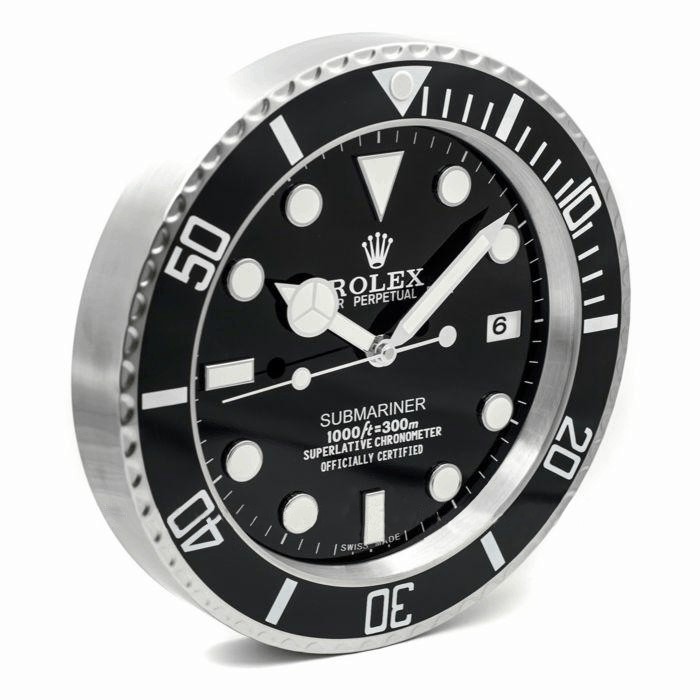
Nearly every luxury watch wears the same two words near the six o’clock marker, and most owners never stop to ask what they cost. They are the most expensive words in watchmaking, and the promise they carry is far narrower than the price suggests.
What the two words legally promise
The current Swiss ordinance came into force on New Year’s Day 2017. The industry itself had conceded that the earlier wording was too easy to satisfy, so the bar was raised. A watch may now use the designation only when three conditions are met: at least 60% of its value originates in Switzerland, its movement is itself at least 60% Swiss (previously 50%), and the final casing and inspection happen on Swiss soil.

The operative word is value, and it repays a second reading.
A cost test dressed as an origin test
The percentage measures money, not components. Expensive Swiss wages, research, development and certification all count toward the total. A watch can therefore carry cheap imported bezels, crystals, cases and bracelets and still qualify, because the Swiss work wrapped around those parts is costly enough to lift the figure.
In plain numbers, physical parts from China may account for considerably more than 40% of a watch while the dial keeps its claim. That is not a violation. It is the rule operating exactly as written.
The cheese watch that made the point
The most persuasive critic came from inside the Swiss establishment. In 2017, H. Moser & Cie., an independent house with a serious reputation, produced a watch whose case incorporated real Vacherin Mont d’Or cheese and named it Swiss Mad. Chief executive Edouard Meylan called the label lax and meaningless, saying it lends credibility to the worst abuses in the industry.
Moser then removed the designation from its own products, even though more than 95% of its components are Swiss, well above the legal minimum. A brand with nothing to hide walking away from a label tells you what the label is worth.
The movement trade nobody advertises
The movement business is where the arrangement becomes visible. Swiss finishing workshops have been documented buying rough Chinese movements, known as ébauches, from suppliers such as Sea-Gull, completing them in Switzerland and selling the finished calibre as Swiss. Chinese base, Swiss finishing, Swiss label: all lawful.

Chinese watchmaking outgrew its reputation
The old assumption about Chinese parts lags well behind the reality. Tianjin Sea-Gull has built mechanical calibres since 1955. Peacock, which dates from that same decade, produces roughly 1.5 million movements annually, enough that European brands design watches around them and that Atelier Wen, a Franco-Chinese label, markets Chinese movements as an asset.
The evidence is not only anecdotal. A watch-industry editor ordered a trio of Chinese watches from Amazon at roughly $130 apiece, concealed the movements and handed them to experienced collectors, dealers, journalists and executives from Swiss brands. Estimates came in between $3,500 and $9,000, and one executive rated a single watch at close to $25,000 for build quality.
Those watches cost $130. People whose job is selling Swiss watches could not feel the gap. A well-built case with Chinese internals is not a worse watch. It is a cheaper one that behaves the same way.
Where Rolex actually stands
Rolex insists that its gold, cases and movements are all made by Rolex in Switzerland. The claim is powerful and, from outside, impossible to confirm. The company is owned by a private foundation, publishes no accounts, discloses no suppliers and has never released an audit of where individual parts are made. No caseback states how much of the watch came from Asia.

None of that is evidence of wrongdoing. It is a point about disclosure. If foreign components were used, the same 60% rule that shelters every other brand would shelter Rolex’s silence too. All Swiss, all in-house remains a promise rather than a proven fact.
What the premium is really buying
Three facts frame the decision:
- The label measures value rather than parts, so foreign content can run higher than buyers expect.
- Chinese components are good enough to pass among the people who sell Swiss watches.
- No brand, Rolex included, offers a verifiable origin breakdown.
You will never see a foreign-parts percentage stamped on a dial, and no catalogue lists which components came from Asia. The designation looks identical whether a watch is wholly Swiss or 60% Swiss by cost with substantial foreign content, and the wrist reveals nothing.
That is the logic the modern super clone exploits. A high-grade example pairs a Swiss-style automatic movement with a ceramic bezel, a sapphire crystal and 904L-grade steel, materials the wider industry uses every day, and omits the five-figure name premium. WIRED reported that Rolex’s own boutique did not catch the super clones brought in for a test.
Swiss watchmaking is not worthless; its best work is extraordinary. The narrower point is that much of what a luxury watch costs is the name on the dial and the conviction behind it. Our super clone collection exists in that gap, and the customer reviews are the best measure of how small it has become.
Frequently asked questions
Does Swiss Made mean every component is Swiss?
No. The ordinance sets a value threshold of 60%, not a parts count. Expensive Swiss labour and certification can carry a watch over the line even when a large share of its components is imported.
Is Rolex really all Swiss?
The company says so. Nobody outside can confirm it: there is no published supplier list, no origin audit, and no legal obligation to provide either.
Are Chinese watch parts inferior?
Increasingly not. Sea-Gull has been building calibres since 1955 and Peacock turns out some 1.5 million a year, while blind-test valuations of inexpensive Chinese watches have reached thousands of dollars.
Jake Ehrlich
Jake Ehrlich is a renowned Rolex historian, collector, and the Editor & Publisher of Jake's Rolex World, one of the most widely read Rolex publications globally. With a passion that spans decades, Jake has owned and worn over 650 Rolex watches, ranging from rare…
All articles by Jake Ehrlich →