

Blog
The Collapse of the Watch Market – Why Prices Are Falling
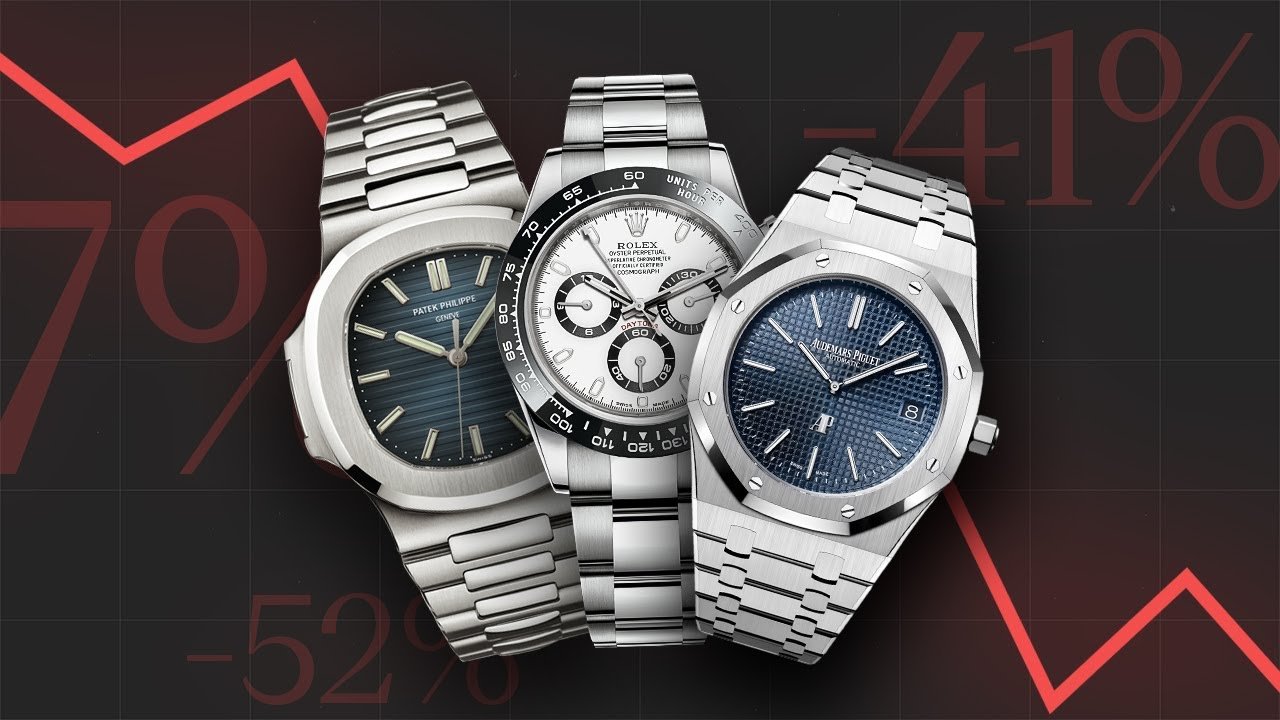
In the spring of 2022 a steel Daytona cost more on the secondary market than most people earn in a year. By the following spring the same watch was worth a fraction of that, and the correction spread across almost every brand that had been flying. What looked like a permanent repricing turned out to be a bubble, and the reasons behind both the rise and the fall are worth understanding if you buy, sell or simply watch from the sidelines.

The numbers that defined the peak
Start with three trades from spring 2022. A Rolex Daytona 116500LN changed hands at $49,183. A Patek Philippe Nautilus 5711 reached $177,700. An AP Royal Oak 15500ST hit $118,407. Each was a multiple of its retail price, and none of them was unusual at the time.
The WatchCharts index, which tracks sixty watches from the ten biggest luxury brands by transaction value, has fallen more than 36% since March 2022. That single figure captures the shape of the correction better than any anecdote.
How a tool became a collectible
Smartphones made the wristwatch optional, yet mechanical watches held their ground. Swiss exports overall slid from 28.6 million units in 2014 to 20.6 million in 2019, a fall of nearly 30%, but the mechanical segment lost only about 11%, mostly at the affordable end. Buyers had stopped treating a watch as equipment. It became design, status and self-expression — a message a smartwatch could not carry.
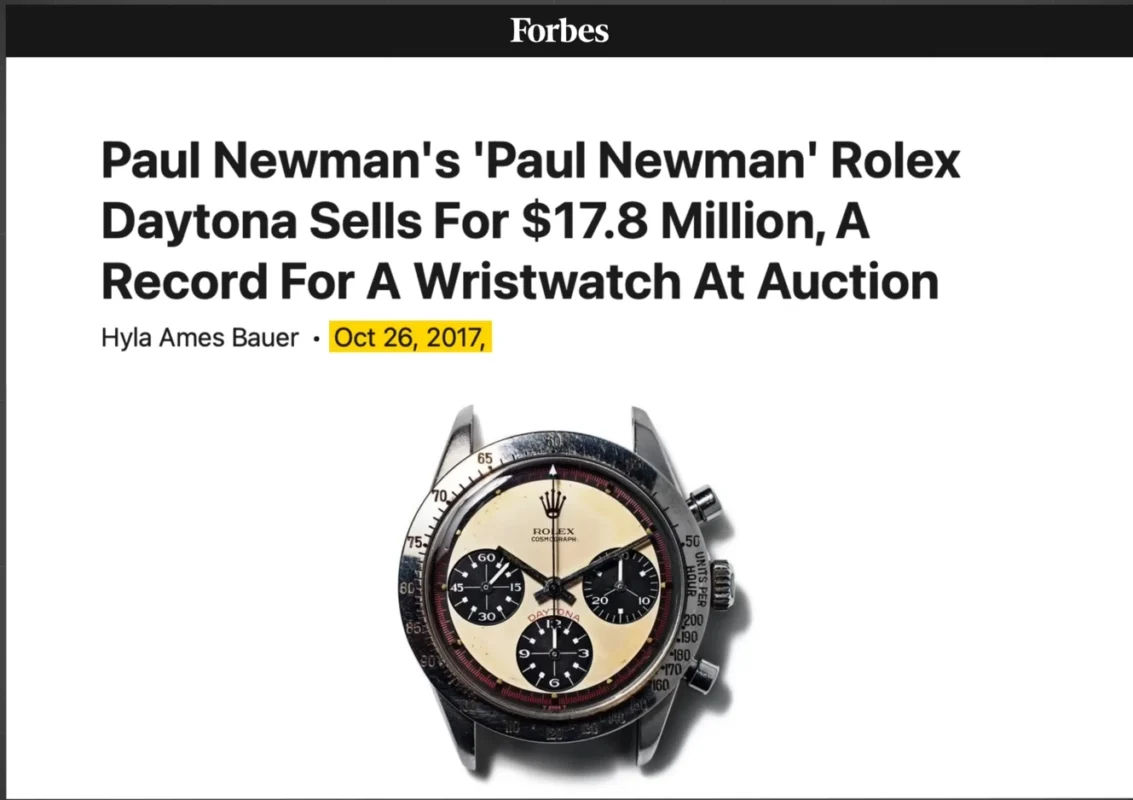
The tipping point for public attention came in 2017, when Paul Newman’s own 6239 Daytona sold for $17.8 million. That number pushed watches into newspapers and created a new kind of buyer chasing exclusivity. Because the leading houses are privately held, they could resist overproduction and play a long game. Demand grew, supply did not, and waiting lists were born.
China amplified everything. Rising wealth and rapid boutique expansion gave Rolex more than 160 points of sale in the country alone, and scarcity elsewhere made the hunt more attractive still.
The flipping era
Once a watch could be sold for more than it cost the moment you left the shop, dealing became an industry. Buyers flipped to dealers, some dealers hoarded stock, and display cases emptied because every incoming piece was already spoken for. A few retailers skipped the waitlist and sold straight to the trade at market prices.
Then lockdowns arrived and retail stopped entirely. Rolex does not permit authorised dealers to sell online, so closed doors meant closed business, and the supply shock that followed was one of the largest in the industry’s history.
Why production could not simply speed up
Assembly is divided into stages the trade refers to as T0 through T3: component pre-assembly, movement assembly and regulation, hands and casing, then bracelet fitting and final presentation. Most technicians specialise in one step rather than covering all four, so a single absent team could stall an entire line. Add disrupted shipments of hairsprings, dials and cases, and output collapsed. Swiss exports fell from 20.6 million in 2019 to 13.8 million in 2020, roughly a third in twelve months.

Stimulus met scarcity
Governments responded with stimulus, rate cuts and quantitative easing, and with travel closed there was little to spend the money on. Discretionary collectibles absorbed the difference. Waitlists that already existed stretched further, and buyers began paying well over retail for anything with a famous name.
Economists have a label for this. Thorstein Veblen described lavish spending as a way to signal prestige, and luxury watches behaved exactly as his theory predicts: as prices rose, demand rose with them, because difficulty of acquisition was the point. Watches became Veblen goods in the purest sense between 2020 and 2022, and outsiders reading the price charts began treating them as an asset class.
The overflow spread beyond the big four. Vacheron Constantin’s blue-dial Overseas peaked at $49,917 in April 2022, double its retail price, largely because buyers who could not get a Nautilus or a Royal Oak went looking for the next best thing.
What broke the market
The first warning came from public equities. Watches of Switzerland Group, which owns a large chain of authorised dealerships, lost more than 60% of its share price from its autumn 2021 high. By spring 2022 the secondary market followed. Four forces did most of the damage:
- Interest rates — central banks raised borrowing costs to fight inflation, and the era of cheap money ended.
- The war in Ukraine — geopolitical instability cut consumer confidence and appetite for large discretionary purchases.
- The crypto crash — trillions in value vanished in 2022, including the funds many buyers had used for watches.
- Chinese lockdowns — strict closures in major cities hit the single largest market for luxury watches.
Those shocks landed on a market that was already overheated. Buyers who had paid inflated prices found no one willing to pay more, and the resale profit that justified the purchase disappeared.
Where the market stands now
A correction is not a funeral. Demand for luxury watches remains healthy; it is simply no longer frantic. Prices have settled toward levels supported by people who want the object rather than the trade, and those buyers tend to hold through downturns, which gives the market a floor.
For anyone shopping now, the lesson is straightforward. Paying a large premium over retail for a current-production steel watch is a bet that the premium survives, and the last three years showed how quickly it can evaporate. Buying what you actually like removes that risk entirely. If the premium itself is the obstacle, our customer reviews explain how replica and superclone owners approach the same watches, and the blog tracks where prices have moved since.
Frequently asked questions
How much have luxury watch prices fallen since 2022?
The WatchCharts index, covering sixty watches across ten major brands, is down more than 36% from its March 2022 peak. Individual models vary widely: hype pieces fell hardest, while less speculative references held closer to retail.
Will secondary prices recover to 2022 levels?
Unlikely in the near term. The 2022 peak was driven by stimulus money, near-zero rates and severe supply shortages at once. Even with strong demand, a repeat of that combination is hard to imagine.
Is now a good time to buy a luxury watch?
For a watch you intend to wear, yes — premiums are smaller and availability has improved. For investment, the past three years are a reminder that watches behave like collectibles, not like savings accounts.
Jake Ehrlich
Jake Ehrlich is a renowned Rolex historian, collector, and the Editor & Publisher of Jake's Rolex World, one of the most widely read Rolex publications globally. With a passion that spans decades, Jake has owned and worn over 650 Rolex watches, ranging from rare…
All articles by Jake Ehrlich →